
The Talon
Vol. 1 | Ed. 15
The Engineering Process At FHS
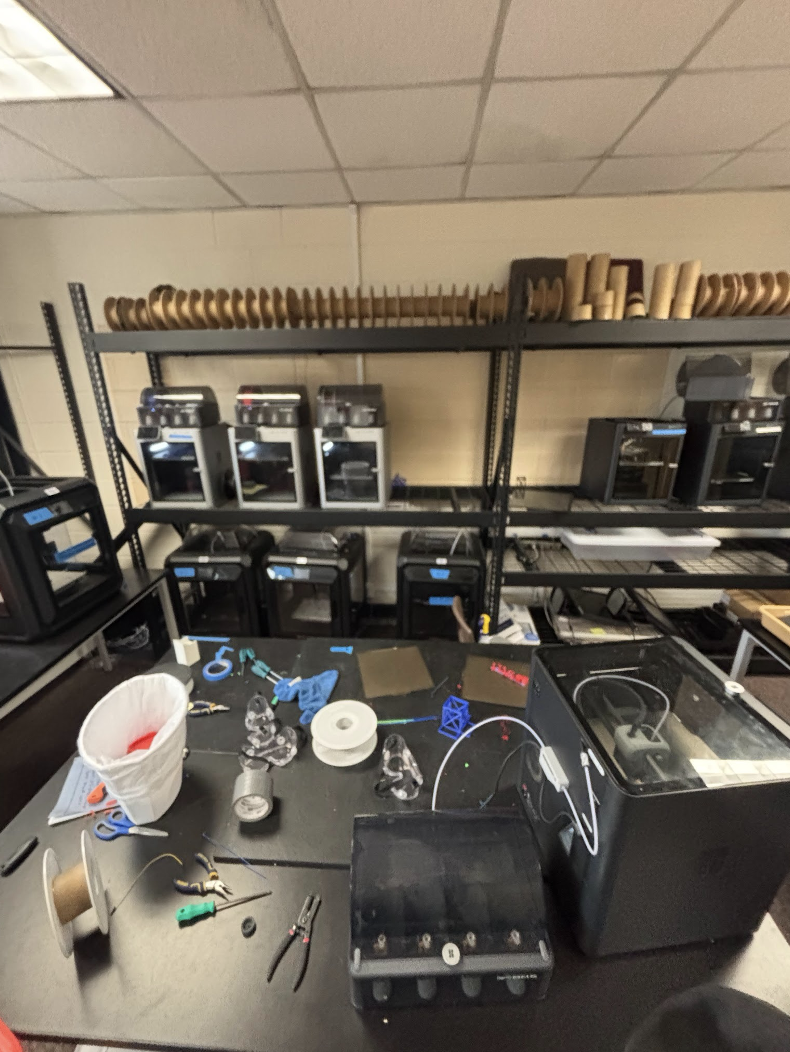
The engineering process at Flagstaff High School is defined by a dynamic cycle consisting of pros and cons, incentivizing students to explore elements in 3D modeling, wood work, simple-complex game coding, as well as web/image editing. Our system is aimed toward being unique to each person, this is only possible due to our complex system run by the Engineering TA’s as well as the diverse number of materials provided by the school and Mr. Russel. From a workspace to qualification/certification exams specified to a wide variety of engineering esc job paths to further provide opportunity for students here at FHS.
The first step of our engineering process is finding a problem that interests us, no matter a physical nuisance in the real day-to-day experience, or simulated obstacle one that can be entirely theoretical, as it's entirely in a digital environment. We treat this stage as an open canvas, by grounding our projects in personal interest, students remain driven to solve said issues. This provides a space many naturally drift toward, ones who enjoy more ownership of their work from the very beginning.
Once a problem is selected, we dive into a deep rabbit hole of background research. This stage is crucial for gaining a comprehensive understanding of the issue. We search all available data on the problem, previous attempts at a solution, science behind the difficulty of said problem, this intensive research phase ensures that we do not settle for the easiest path. Instead, it empowers us to generate separate, highly unique solutions specified to different criteria we discover.
As we narrow down for a single solution realism shift to our guiding principle. We must dedicate significant time to material research, weighing the constraints of our environment. Students evaluate the inventory at hand within our school against the financial boundaries of our class’s budget. This phase forces us to balance ambitious creativity with practical limitations of cost and material availability.
With a realistic plan in place, we transition into an intensive, weeklong design process using our school’s 3D design software. This digital prototyping phase allows us to build, scale and visualize our ideas on a computer long before wasting physical resources. This is often the step many ideas are forced back to the drawing board as digital implementation bridges the gap between abstract ideas and mechanical execution.
Once a physical prototype is finally created, our mindset completely shifts. It is crucial to never expect your solution to work on the first try. This is the true beginning of being an engineer, a relentless cycle of trial and error, troubleshooting unexpected error codes not just in one specific phase but from wood work, 3D print alignment, constant 3D software updates, school resource limitations. At Flagstaff High School, we embrace this process of improving our design one prototype at a time.